Mértola, Museum Village
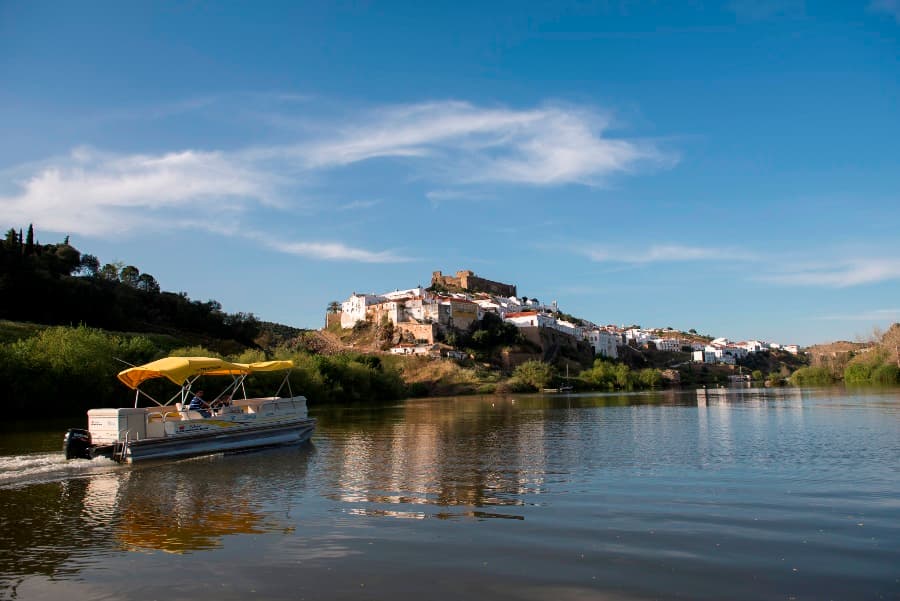
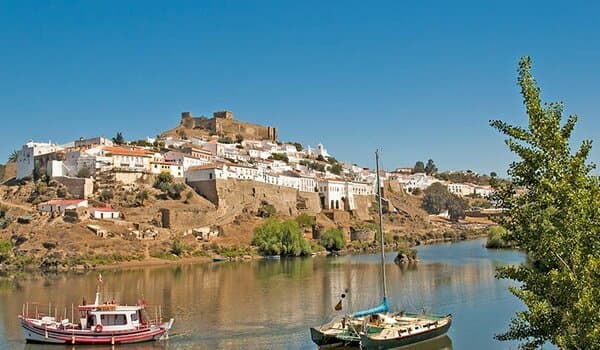
The municipality of Mértola is located in the Southeast region of Portugal and occupies an area of approximately 1292 km². It belongs to the district of Beja and is part of the Lower Alentejo region.
The antiquity of this region is attested by the various archaeological remains that prove the continuous occupation of this territory. Throughout the municipality, evidence of early settlement abounds; the first traces date back to the Neolithic period, five thousand years ago. Iberians, Phoenicians, Greeks, and Carthaginians arrived in Mértola, in an occupation motivated by the control of trade routes. The Romanization of Mértola took place throughout the 2nd century BC, with the effective occupation of the territory occurring in the second half of that century.
The importance of Mértola is explained by the economic and strategic role of the Guadiana River itself. This large river artery was at the time the main gateway to the interior Alentejo region and the only route of contact with the Mediterranean.
Designated as Iulia Myrtilis or Myrtilis Iulia, the city gained importance from its commercial activity. In Late Antiquity, Myrtilis maintained its economic importance and mercantile vocation.
The first Christian evangelizers arrived, and in religious architecture, the period witnessed the construction of the first Christian buildings, exemplified by the Paleochristian Basilica of Rossio do Carmo. The military upheavals that shook the Roman Empire created situations of insecurity and instability in the city. Throughout the municipality, vestiges of Visigothic communities appear, represented by various architectural remains left in the territory.
With the invasion of the peoples of North Africa, led by Tarik in 711, Mértola reaffirmed its commercial function and reinforced its status as the westernmost port of the Mediterranean. During this period, one of the most important phases in the history of this territory occurred, and the city of Martulah (nicknamed by the Moors) even became, for a short period in the 11th century, the capital of a small independent Islamic emirate, the Taifa of Mértola.
The Christian conquest took place during the reign of King Sancho II, by the commander of the Order of Santiago, Paio Peres Correia, in 1238. The territory was then donated to the Order of the Knights of Santiago and, progressively, lost its commercial importance.
Mértola was the national headquarters of the Order of Santiago for several decades (until 1316) and oversaw a vast territory around it. In 1512, King Manuel I granted a charter to Mértola, and during the 16th and 17th centuries, the port reached new prominence with the export of cereals to the Portuguese occupations in North Africa.
By the end of the 19th century... In the 19th century, the discovery and exploitation of the mineral vein in the "Sancto" Domingos mountain range gave new impetus to the lands of Mértola. A mining complex was established in the village of São Domingos, consequently creating a significant population center. With the decline of mining in the 1960s, the municipality experienced a massive population exodus, losing more than 50% of its population and never recovering it.
In the 1980s, intense archaeological activity revealed the town's grand past, uncovering a vast discovered heritage that had been forgotten until then. From the Roman and Islamic city, in addition to its own urban layout, some monumental vestiges remain and, above all, the small marks of everyday life and the memories of many forms of knowledge.
It is these signs, these artifacts, collected in archaeological campaigns and rigorously studied, that today form the sediment of its identity and the content of its various museum centers, giving Mértola the label of Museum Town.
Estação Náutica de Mértola holds the official recognition awarded by the Portuguese Nautical Stations Network. View the certificate and accreditation details.
View certificate
Explore all the activities available at this nautical station.

Fórum Oceano is the managing entity of the Portuguese Sea Cluster, certified and recognised by the Ministry of Economy and Sea, Ministry of National Defence, and Ministry of Planning and Infrastructure.
UPTEC Mar, sala C2, Av. da Liberdade S/N 4450-718 Leça da Palmeira – Portugal
Copyright @ 2026 Nautical Stations of Portugal. All rights reserved. Developed By Yacooba Labs.